
Angmar (Biome)
Angmar (Biome)
Angmar (Biome)
| Visiting Traders |
|---|
| None |
| Generated Structures |
|---|
| Angmar towers Angmar shrines Angmar Orc camps Angmar Warg pits Rhudaur Hillman villages Troll hoards stone ruins Orc dungeons |
This article is about the biome. For the faction, see here.
| “ | For at that time the realm of Angmar arose in the North beyond the Ettenmoors. Its lands lay on both sides of the Mountains, and there were gathered many evil men, Orcs, and other fell creatures. | ” | |||||||||||||||||||||
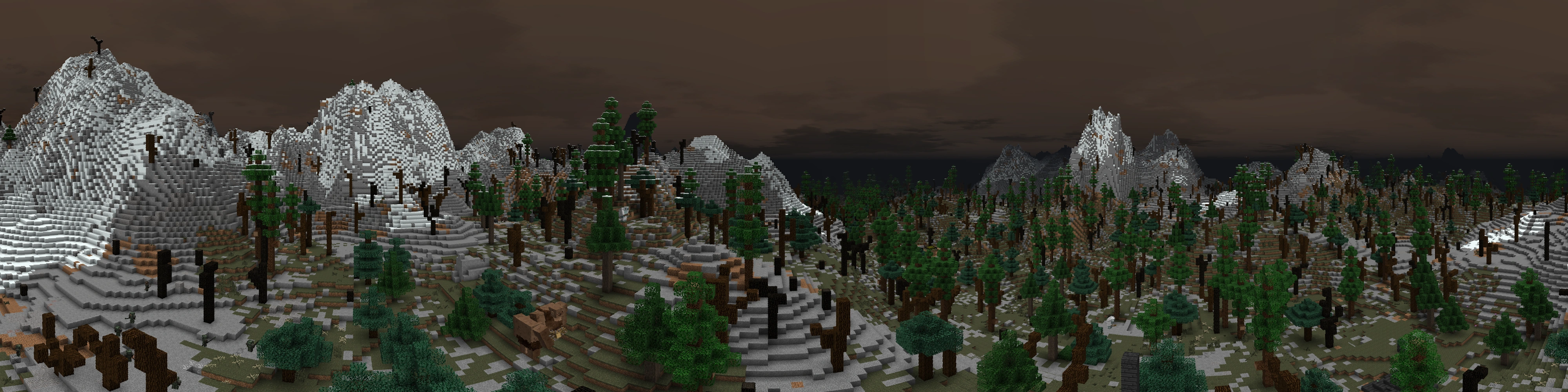
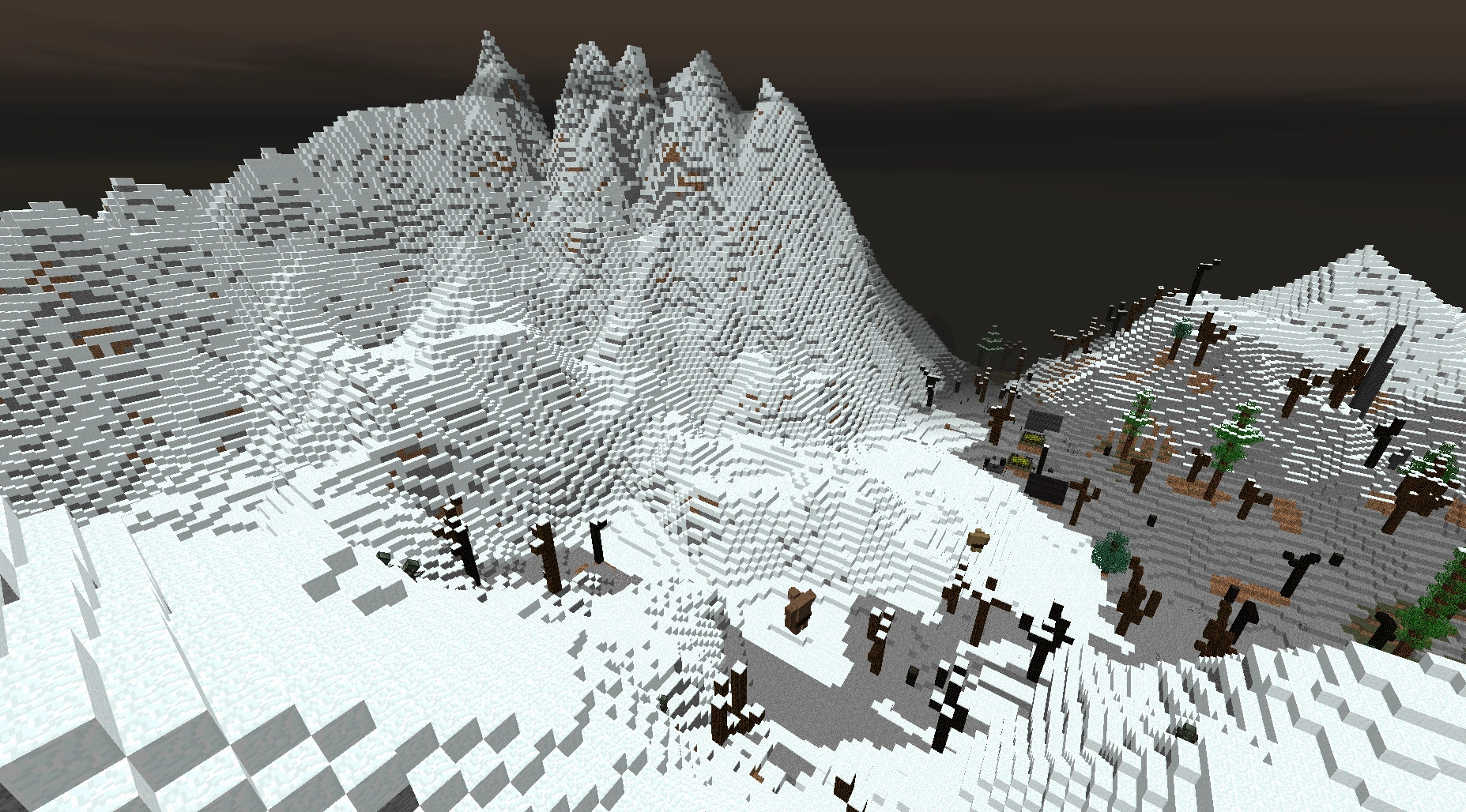
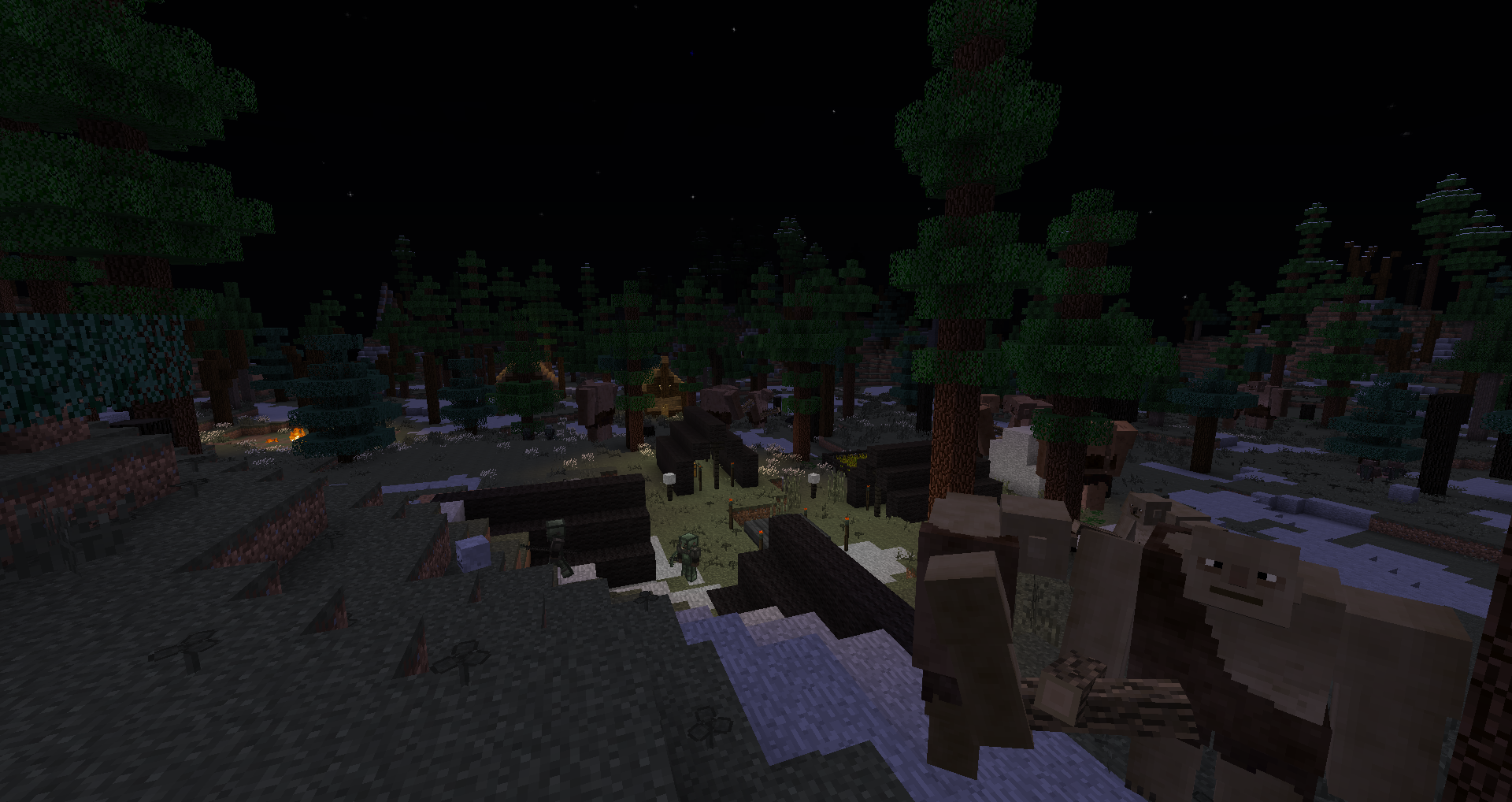
| Biome(s) |
|---|
| Angmar, Ettenmoors, Coldfells, Trollshaws, Lone-lands |
| Members |
|---|
| Angmar Orc (archer, bombardier, chieftain, trader), Angmar Warg (bombardier), Troll, Hill-troll, Hillmen (axe-thrower, warrior, chieftain) |
| Alignment command name |
|---|
| ANGMAR |
| Crafting Table |
|---|
| Angmar crafting table |
| Shield | Banner |
|---|---|
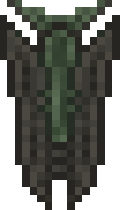 |
| Added in (first NPCs) |
|---|
| Public Beta 13 |
The Witch-realm of Angmar was in ancient years, a stronghold of evil in the north, a power that for centuries made war with Arnor under their fell Witch-king, the Lord of the Nazgûl. Of old the faction was home to many Orcs, Trolls, Wargs, and Men, and by its power the North Kingdom of the Dúnedain was wiped out. But Angmar too fell shortly after, for the High Elves and Men of Gondor destroyed their armies in a battle at Fornost, and the vale of Angmar was purged of evil.
However, evil had long laid hid in the mountains of the North, and that evil has slowly returned. Orcs, Trolls, and Wargs have returned to the ruins of the Witch-realm. Ruined fortresses now host bands of Orcs, as do newer camps.
In addition, another ancient power has returned to Angmar: the Hillmen of Rhudaur. These men are fierce, and though their numbers are massively reduced from their former strength, they remain staunch foes of the Dúnedain.
Contents
History [ ]
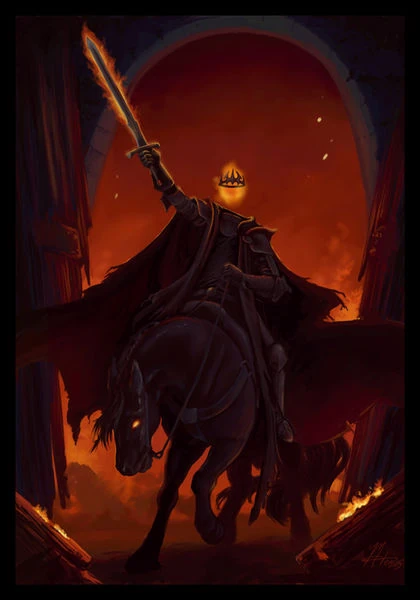
The Witch-king of Angmar, Lord of the Nine.
Angmar was founded in T.A. 1300 by the Lord of the Nazgûl, who ever afterward became known as the Witch-king of Angmar. Angmar controlled lands on both sides of the Misty Mountains, with a deep vale in the northern mountains becoming a primary centre of the realm’s power. In truth, much of what composed the Witch-realm existed in the North before its official formation; and so from the outset the Witch-king was able to rally Orc-Tribes of the Mountains of Angmar, as well as Hill-Men that dwelt in the Vale of Angmar, the great Wargs of the north, and the Trolls and Hill-trolls that dwelt in the fells south of the Witch-realm. The Witch-king built his city at Carn Dûm, upon the last peak of the Mountains of Angmar, a fortress incredibly strong and thoroughly evil. Camps and fortresses were built throughout the realm of Angmar, and Orcs of Mount Gundabad and Mount Gram joined the Witch-king, bringing their fortresses with them.
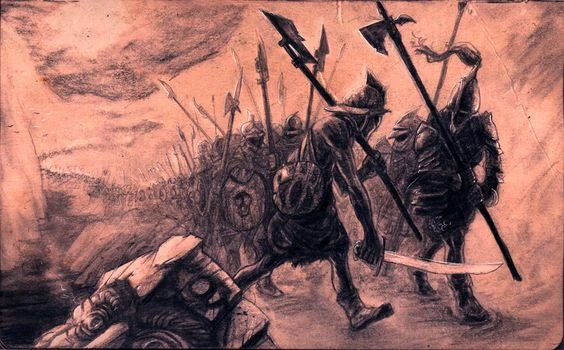
Orcs of Angmar marching to war against Arnor
Angmar’s sole purpose was the destruction of the splintered Kingdom of Arnor, and immediately after its formation it declared war on the realm’s successor states: Arthedain, Cardolan, and Rhudaur. And war it delivered: armies of Orcs swarmed north-eastern Eriador, and the Men of Arnor became engaged in a long war for their own survival. This was no easy task, for the Orcs and Men of Angmar were not just scattered tribes riled up to war. They were many, and now they were organized and well-armed with cunning blades and strong armour. And there were some among them that were even deadlier: Warrior-Orcs that used armour wrought with many spells and blades that proved deadly to all that they pierced.
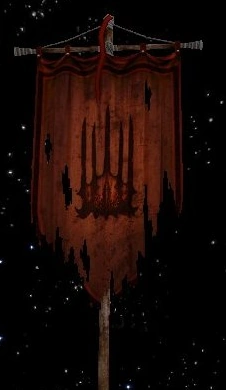
The Iron Crown of Angmar once reigned across the North
In 1350 Rhudaur betrayed the Dúnedain and joined Angmar. With increased strength the two unleashed large armies against Arthedain, and so in battle with Rhudaur King Argeleb I of Arthedain was slain in 1356 during an invasion of the Weather Hills. But with the help of Lindon and Cardolan Arthedain was able to push back, reclaiming the Weather Hills and making of them a frontier of war, alongside the Road and the Hoarwell.
For the next fifty years constant battles were fought at these borders, with neither side making significant gains; and as this continued Rivendell was besieged by Rhudaur. Then, in 1409, Rhudaur was taken over entirely by Angmar, solidifying it in the Witch-realm. The Siege of Rivendell grew bloodier as several great armies were sent out from Angmar and Rhudaur into Arthedain and Cardolan. In a battle for the watchtower of Amon Sûl on Weathertop King Arveleg of Arthedain was slain by great warriors of Rhudaur. Amon Sûl was razed, though its Palantir was saved and returned to Fornost. The forces of Angmar poured into Cardolan, ravaging much of the northern parts of Minhiriath, while armies of Orcs and Men attacked Fornost and the North Downs in Arthedain. With the help of the Elves of Lindon Angmar’s forces were repelled from Arthedain and Cardolan. But the damage was done: Amon Sûl and the Weather Hills were lost, Arthedain had taken heavy losses, and Cardolan was weak and scattered.
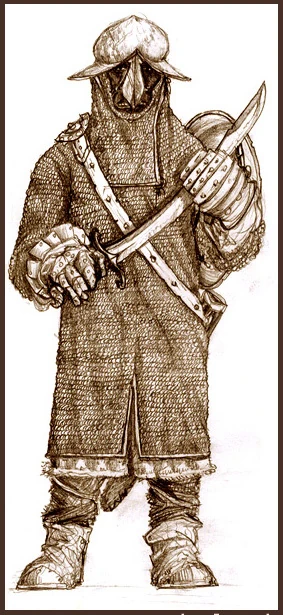
A heavy-armed Uruk of Angmar during the reign of the Witch-king
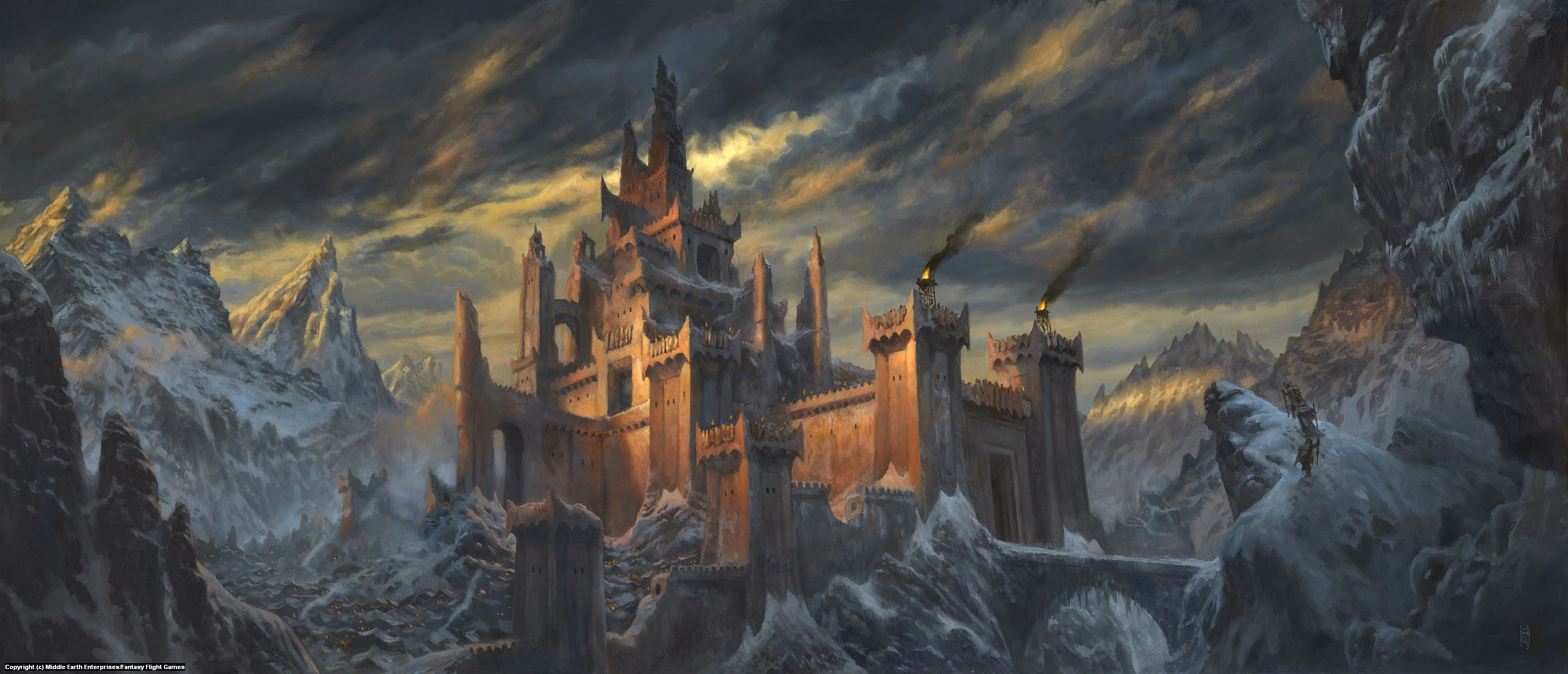
The dark fortress of Carn Dûm in the North.
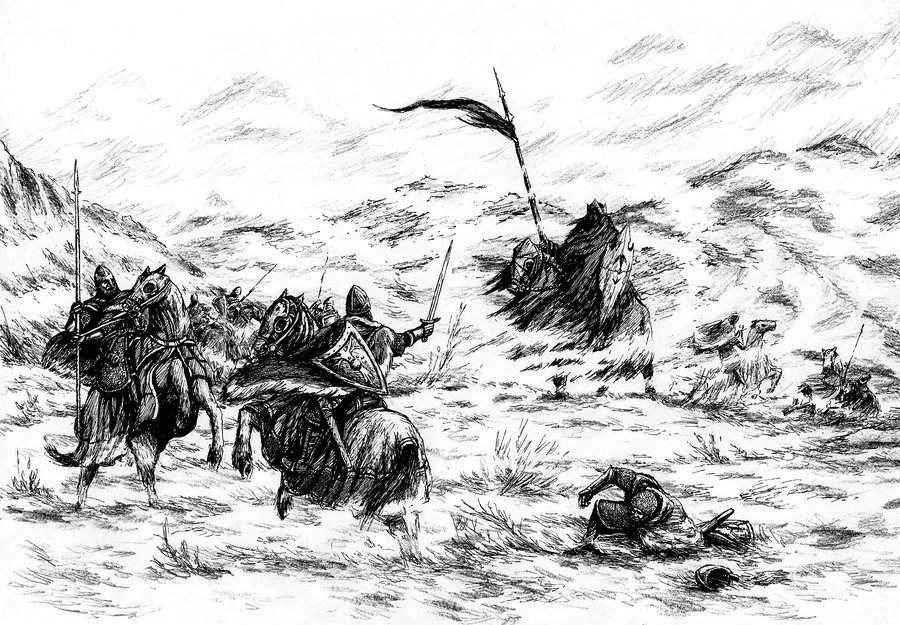
The Witch-king facing Eärnur and the cavalry of Gondor.
After the plague the Witch-king bided his time, and mustered his armies for one final stroke. In 1974, six hundred years after the start of his wars on the Dúnedain, all the hordes of Angmar were unleashed, and they swept into Arthedain. Fornost was captured and ruined, and nearly all the surviving Dúnedain of the North were slain. A few escaped with King Arvedui to the northern Blue Mountains, and many more fled with his son to Lindon. The Witch-king himself led the capture of Fornost, and sat in the throne that had once been the seat of the heirs of Isildur. Arnor was destroyed, and Angmar had achieved its mission.
But soon after this triumph, the High Elves and Men of Gondor attacked with great force, and the armies of Angmar were outnumbered. Though the Witch-king himself led his Orc hordes in the last combat in the fields west of Fornost, the armies of Angmar were destroyed. There the last warriors of Angmar were destroyed, as well as many of the Orcs and Men, and the Witch-king fled into the north, not to be seen again for years to come. Without his leadership Angmar collapsed under the counter-attack of the Elves and Men. High Elves from Rivendell and Men of Gondor scattered the remnants of Rhudaur, destroying their strongholds and driving them into the wild. Carn Dûm was razed, and then the Dúnedain returned to Gondor, and the High Elves returned to Lindon and Rivendell.
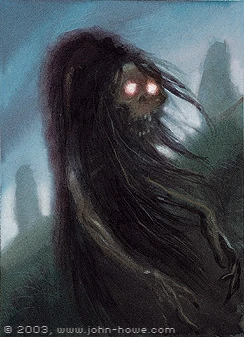
Barrow-wights of the Barrow-downs: evil spirits of Angmar.
For a thousand years, little hint of the Witch-realm remained. The Men of Angmar were wiped out, for they dwelt in the vales on the western and eastern sides of the Mountains, and these were both wiped clean of Orcs and Men by the Gondorians and Northmen. The Hillmen of Rhudaur lived on in secret in the Coldfells and Ettenmoors, but were fewer in number than the Dúnedain of the North, and did not re-emerge from the deep dales and caves for a long time. The Trolls and Wolves of Angmar became wild, dwelling in the north and troubling those remaining in Eriador for many a year. The remaining Orcs of Angmar either fled to Mount Gundabad and Mount Gram, which became the capitals of great clans of Orcs, or hid in the Mountains of Angmar, which were never purged and remained a place of evil.
Now, after a thousand years, evil is stirring in Angmar again. The Orcs have multiplied once more in the Mountains, and under fell chieftains have come down into the Vale of Angmar and occupied it once more. These chieftains have reoccupied old fortresses, built new camps and holds, and have gathered Trolls, Wargs, and Hill-trolls to themselves. South of Mount Gram the Hillmen of Rhudaur have come down from the Troll-fells and have built new villages in the northern reaches of the Lone-lands. Both realms are mere shadows of their former power, but both are still thoroughly evil. Even now, they muster to attack the Rangers, gathering what strength they have. All they need is a leader.
Rhudaur [ ]
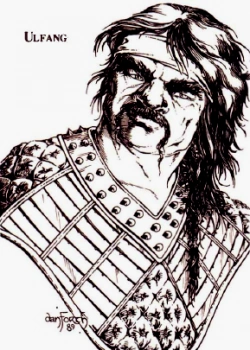
Ulfang, whose people were related to the Hillmen.
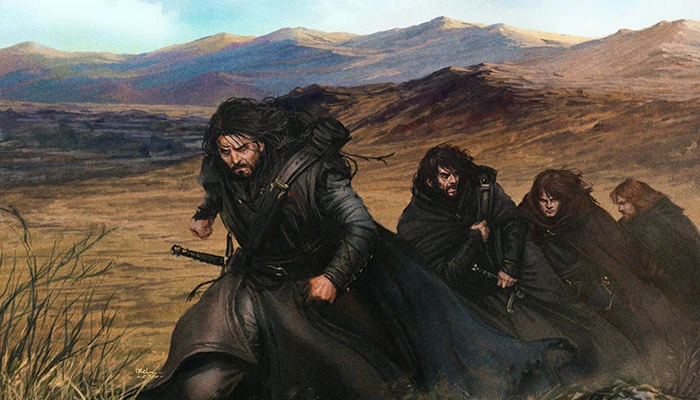
Hillmen of Rhudaur crossing the wastes.
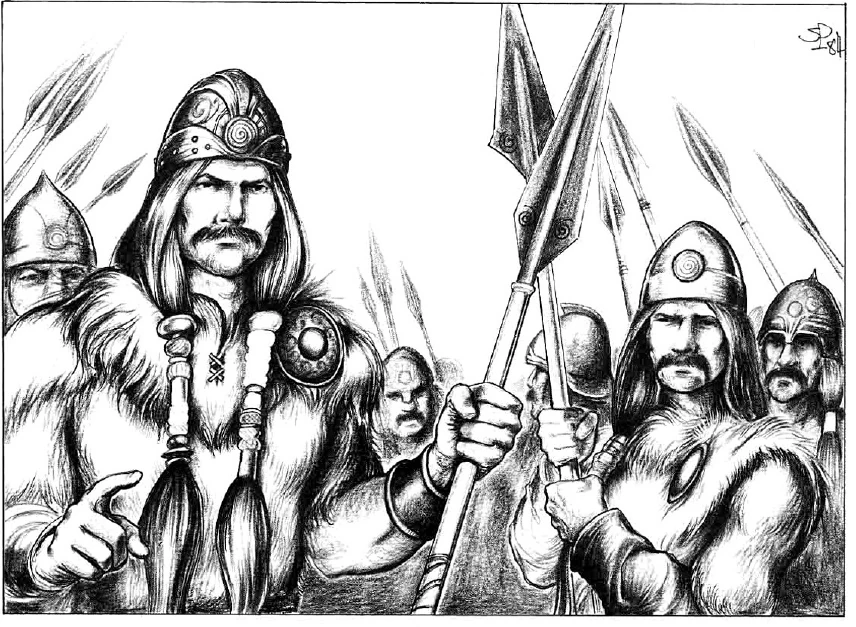
Men of Angmar brandishing their spears.
When the Kingdom of Arnor was founded, Rhudaur was among the areas the Númenóreans settled. Located in the eastern dales of Eriador, it had only a small population of Sea-men. They were far outnumbered by men of another kind, hill-dwelling cousins of the Easterlings of Morgoth from the First Age. These lived from the Angle through the Ettenmoors and through the valley of Angmar. Many wars were fought with these people before they were subdued, and King Valandur of Arnor fell in battle with them in T.A. 652. After the splitting of the three kingdoms of the North, the Hillmen and Dúnedain coexisted relatively peacefully, mingling together without conflict. Over time, however, the Westmen were more or less merged into the population of Hillmen. Thus they were shorter-lived, and grew to be of evil nature. Many of the hillmen fought with the King of Rhudaur against Cardolan.
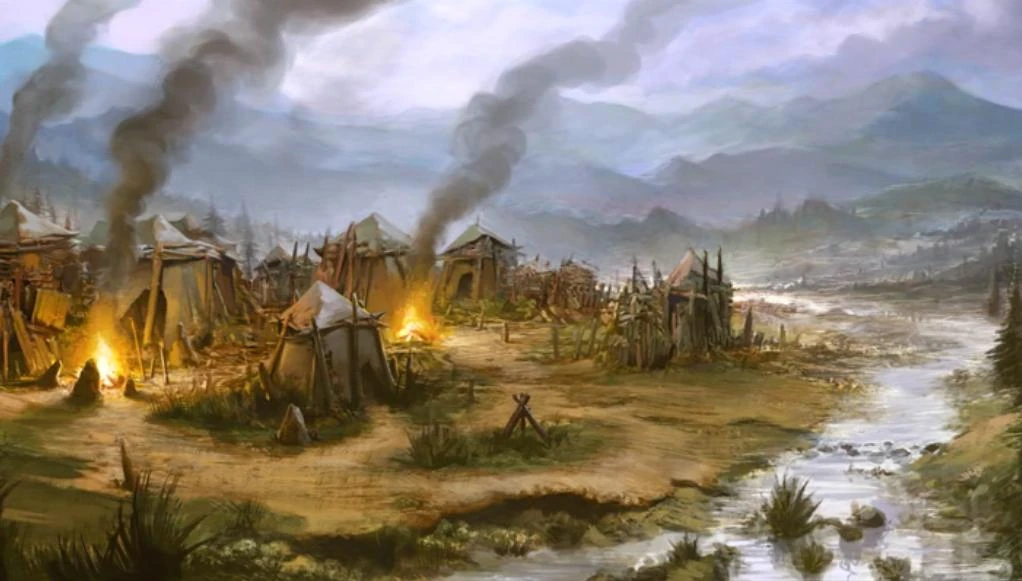
The host of Angmar encamped
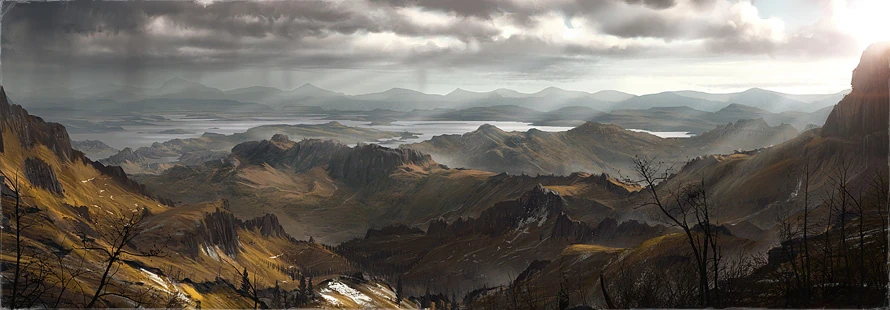
The high hills of the Ettenmoors
When the Realm of Angmar was founded in the north, they took many of the indigenous hillmen into their armies. Civil war crippled Rhudaur, as many of the Hillmen slew the last remaining Dúnedain. In 1350, control of Rhudaur was seized by fell lords of the Hillmen, and under them the kingdom allied itself with the Witch-realm. These Hillmen quickly put to death any remaining Dúnedain in their kingdom and joined Angmar in its war on Arthedain, Rivendell, and Cardolan, greatly strengthening its armies. In 1409, Angmar and Rhudaur merged, with the latter essentially disappearing as an entity. More reinforcements came to the siege of Rivendell, but due to a strange power in that vale they were unable to break through. The armies of Angmar crippled Cardolan but were beaten back by Elven aid to the North Kingdom. During the two hundred years of relative peace that followed, the Hillmen learnt sorcery and necromancy, enslaving fell spirits and bringing terror to the North.
Hillmen of Angmar and Rhudaur continued to fight in the armies of the Witch-king until 1974, when great strength was released upon Arthedain in a final stroke. Fornost was taken, and any who remained of Arthedain fled to the seaward Elvish country. But the next year, vengeance came swift, for the Men of Gondor and Elves of Lindon and Rivendell destroyed the host of Angmar and slew them utterly. None of the Hillmen in this host survived, and those that remained fled into the Coldfells and Ettenmoors in the north, where those few who remained hid for centuries.
The Hillmen of Angmar remain a small and scattered people, living mainly in the lands of Angmar and the Ettenmoors. Though their hatred of the Dúnedain is no less, they are not now strong enough to launch attacks or fight wars. But they nonetheless survive, awaiting a day when they may sweep out of the North as they once did, and hurl all their enemies into the Sea.
Locations [ ]
The legions of the North are most highly concentrated in their home biome but also spawn variously in several nearby areas.
Alignment [ ]
Angmar is allied with all of the primary Orc factions except Isengard, and is enemies with all of the Free Peoples. They encourage war crimes (the killing of enemy civilians).
Inter-faction relations for Angmar (ANGMAR)
| Allies | Friends | Neutral | Enemies | Mortal Enemies |
|---|---|---|---|---|
| •Dol Guldur •Mordor | •Gundabad | •Dunland •Half-trolls •Isengard •Morwaith •Near Harad •Rhúdel •Taurethrim | None | •Blue Mountains •Bree-land •Dale •Dorwinion •Dúnedain of the North •Durin’s Folk •Fangorn •Gondor •High Elves •Hobbits •Lothlórien •Rohan •Woodland Realm |
Sphere of Influence [ ]
Angmar’s area of influence covers all of Angmar as well as the Ettenmoors, Trollshaws, Coldfells, and parts of the Misty Mountains, Lone-lands, Eriador, Forodwaith, and Rivendell, with their areas of influence centred at the Trollshaws, Carn Dûm, and Mount Gram Waypoints.
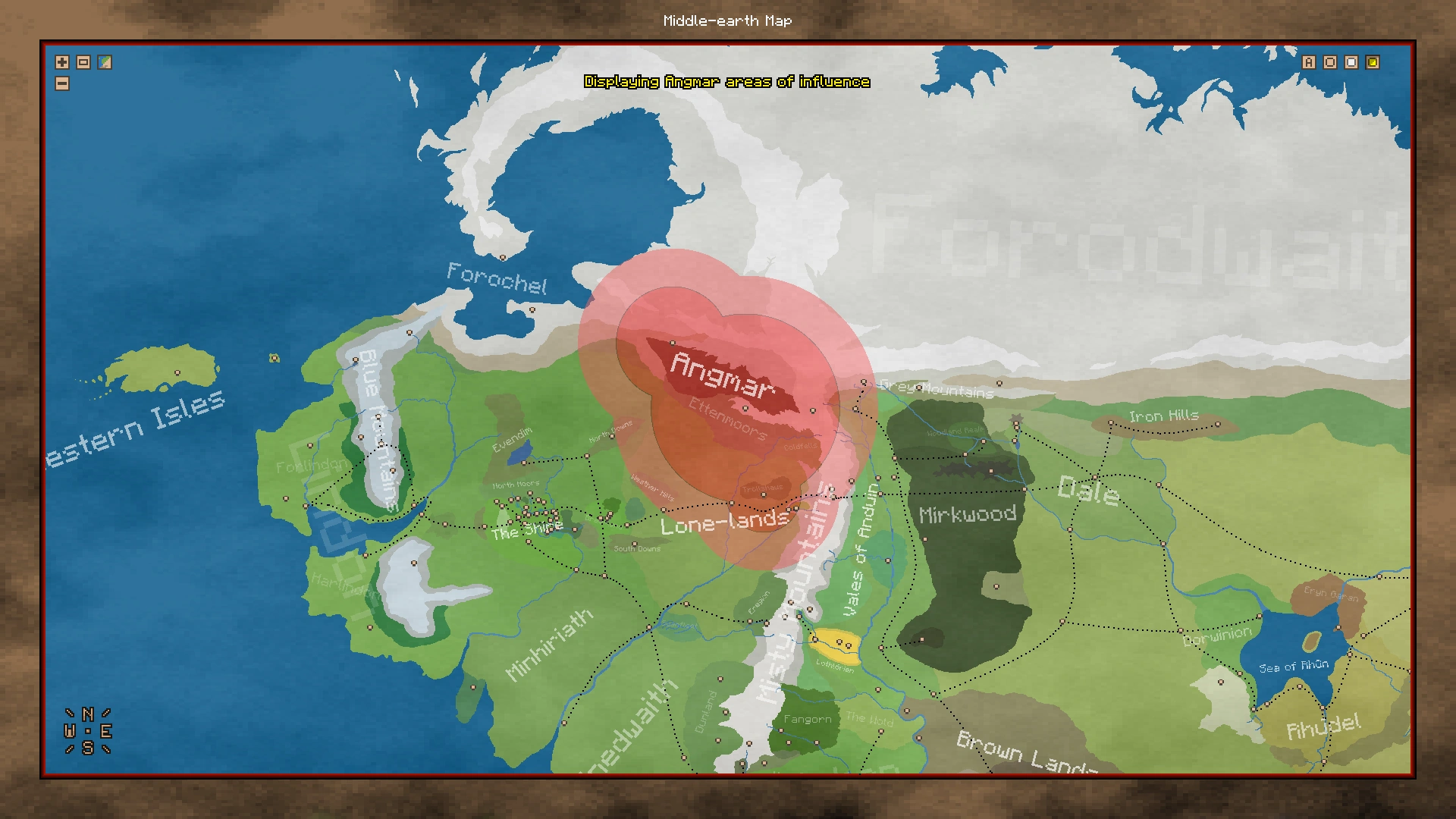
Angmar’s area of influence
Invasions [ ]
Angmar Invasions come in three forms: Angmar invasions, which feature all Angmar Orcs and Wargs (including Warg Bombardiers); Angmar Warg invasions, which feature only normal Angmar Wargs and Warg-Riders; and Rhudaur invasions, which feature Rhudaur Hillmen of all types (except chieftains).