
Уникальная и бесполезная. Крейсерская подлодка Surcouf (N N 3)
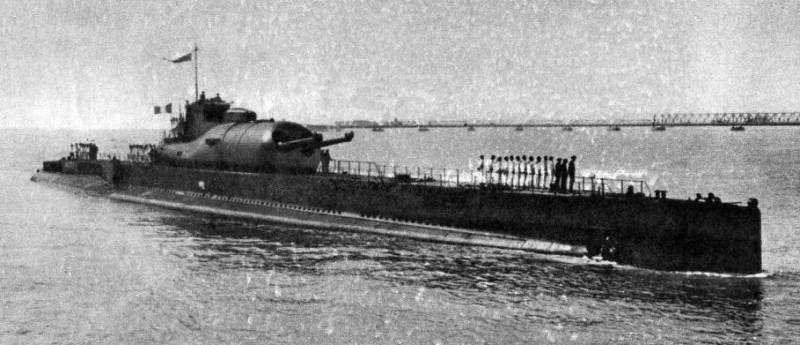
В 1934 г. в состав ВМС Франции вошла новейшая крейсерская подводная лодка Surcouf (N N 3) – на тот момент самый крупный корабль своего класса в мире, несший самое мощное вооружение. Подлодка оставалась в боевом составе в течение нескольких лет, но за это время так и не смогла раскрыть свой потенциал.
По условиям договоров
Вашингтонское морское соглашение 1922 г. ограничивало строительство крупных надводных кораблей, но никак не затрагивало подводный флот. Вследствие этого в разных странах начались работы по созданию т.н. крейсерских подлодок – субмарин с развитым артиллерийским вооружением крупных калибров. Вместе с другими этим направлением занялась Франция.
1 июля 1927 г. на верфи в Шербуре была заложена головная «артиллерийская подлодка» нового проекта, названная в честь известного капера Робера Сюркуфа. В обозримом будущем планировалось построить два однотипных корабля. Три подводных крейсера создавались для рейдов на коммуникациях вероятного противника – самостоятельных и в составе корабельных групп. Именно с этим был связан специфический состав вооружения на борту.
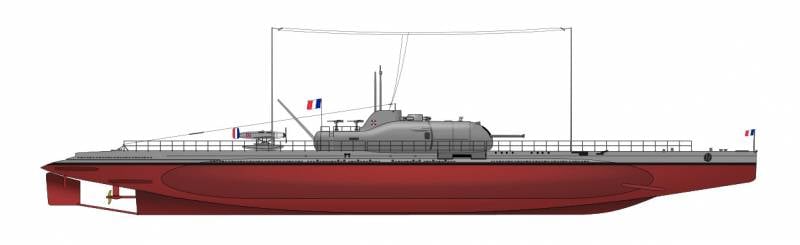
Лодку Surcouf спустили на воду в ноябре 1929 г. и вскоре вывели на испытания. Однако на этом этапе проект столкнулся с трудностями военно-дипломатического характера. В январе 1930-го в Лондоне открылась конференция, по результатам которой появилось новое ограничивающее соглашение. Лондонский морской договор вводил максимальное водоизмещение подлодок и допустимые калибры орудий.
Париж смог отстоять уже готовый «Сюркуф», но строительство двух следующих подлодок отменялось. Командованию ВМС пришлось пересматривать свои планы и стратегии.
Испытания подлодки и исправление выявленных недочетов заняли достаточно много времени. От большей части проблем успешно избавились, но отдельные недостатки оказались принципиально неустранимы. В таком виде флот принял подлодку в апреле 1934 г.
Особенности конструкции
Surcouf представляла собой дизель-электрическую подлодку однокорпусной конструкции с рядом необычных черт. В первую очередь, это рекордные размеры и водоизмещение. Длина составляла 110 м при ширине до 9 м. Водоизмещение в надводном положении – 3,3 тыс.т, в подводном – почти 4,4 тыс.т. Более крупные подлодки появились только к середине сороковых годов.
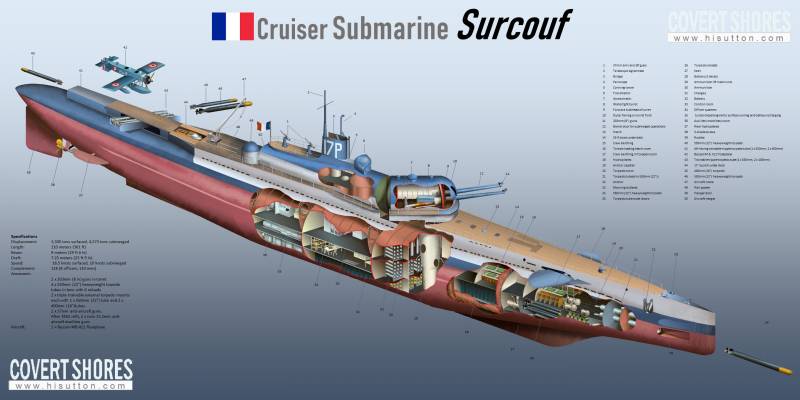
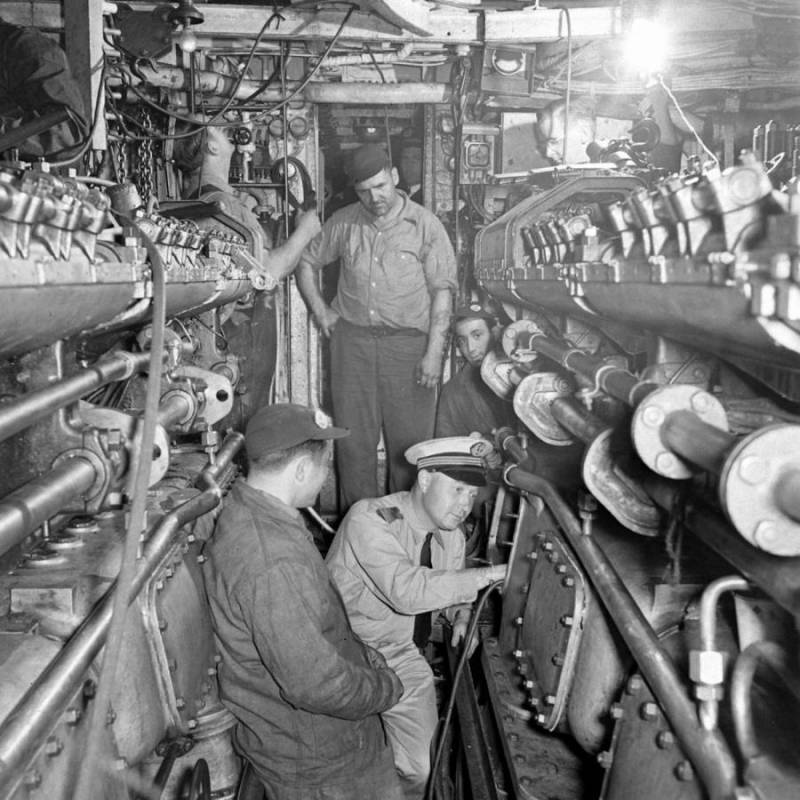
Корабль получил два дизельных двигателя фирмы Sulzer общей мощностью 7600 л.с., использовавшиеся для движения на поверхности и для зарядки аккумуляторов. Подводный ход обеспечивался двумя электромоторами суммарной мощностью 3400 л.с. Такая энергоустановка обеспечивала надводную скорость более 18 узлов и подводную до 10 узлов. Дальность плавания – 10 тыс. миль в надводном положении или 60-70 миль под водой. Глубина погружения – 80 м.
Лодкой управлял экипаж из 118 человек, в т.ч. 8 офицеров. Члены экипажа отвечали за управление всеми системами, имелись артиллеристы, авиационная группа и т.д. Из матросов при необходимости формировалась досмотровая группа. Автономность по запасам достигала 90 суток, что позволяло совершать длительные походы и работать в океанской зоне. Предусматривалось помещение для 40 пассажиров или пленных.
Особый интерес представляет комплекс вооружений. В носу разместили четыре торпедных аппарата калибра 550 мм. В корме, под палубой, предусматривались два подвижных блока, каждый из которых включал один 550-мм и пару 400-мм аппаратов. Таким образом, на борту имелось 10 торпедных аппаратов двух калибров. Общий боекомплект – 22 торпеды.
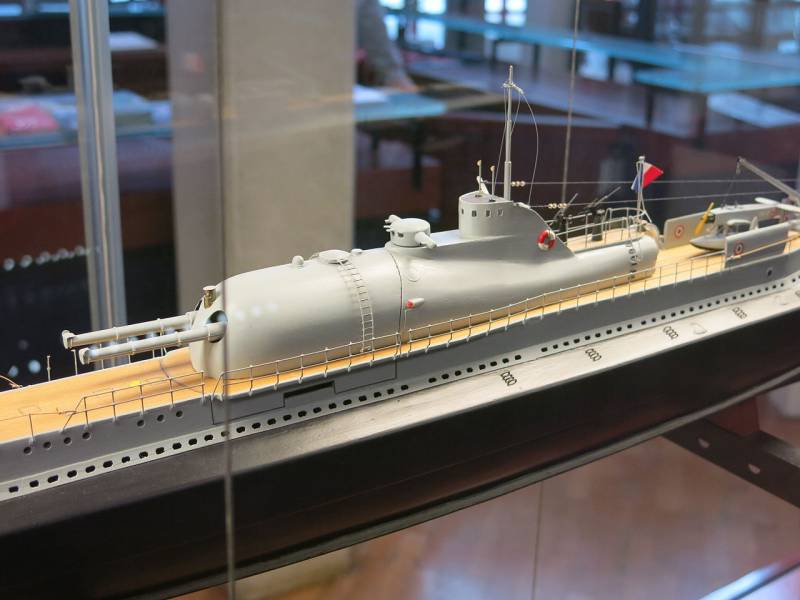
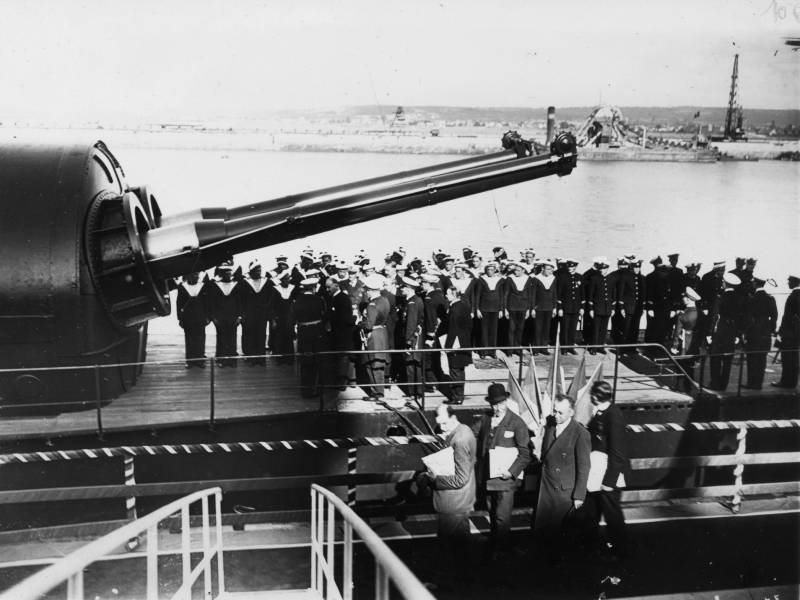
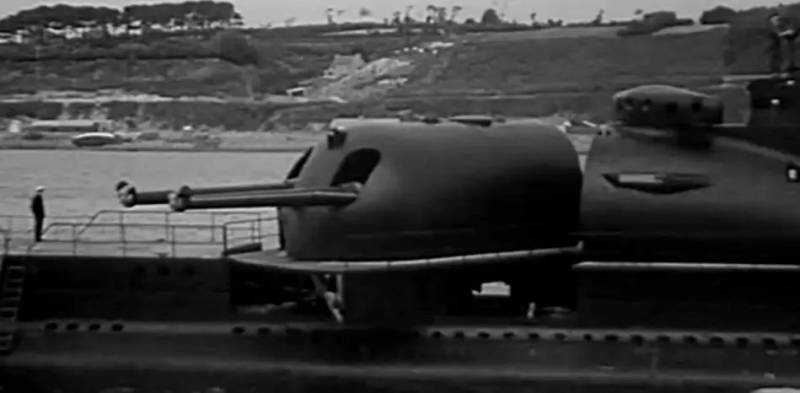
Вместо традиционной малогабаритной рубки «Сюркуф» получил крупную герметичную надстройку с частичным бронированием. Носовой агрегат надстройки представлял собой башню с двумя орудиями 203mm/50 Modèle 1924. Обеспечивалась горизонтальная наводка в небольшом секторе. Внутри имелись магазины на 14 снарядов и укладки на 60 выстрелов.
За башней на надстройке помещался оптический дальномер с базой 5 м. Из-за его положения дальность обзора, измерений и стрельбы ограничивалась 11 км. При использовании перископа дальность огня увеличивалась до 16 км. Однако на кораблях с более удачными средствами управления пушка Mle 1924 била на 31 км.
По проекту, основная часть подготовки к стрельбе могла осуществляться на перископной глубине. После всплытия требовались только тонкая наводка и некоторые другие процедуры. На производство первого выстрела после всплытия требовалось всего несколько минут. После стрельбы в минимальное время лодка могла уйти под воду.
На надстройке установили зенитное вооружение. Его состав дорабатывался, и в итоге подлодка получила пару 37-мм зенитных пушек Mle 1925 и четыре крупнокалиберных пулемета Hotchkiss M1929.
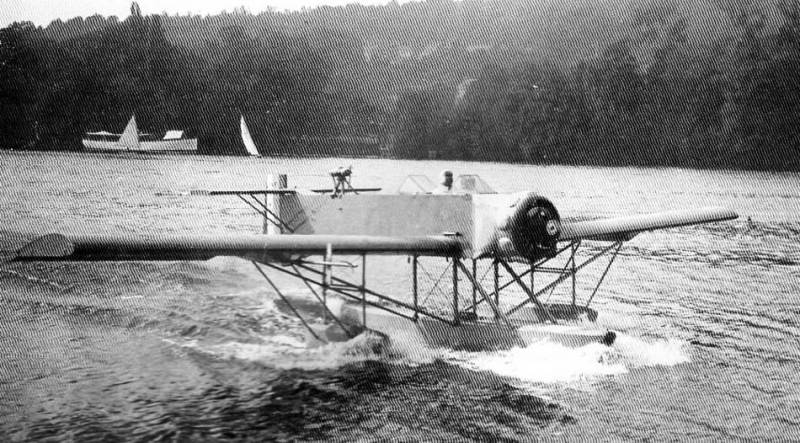
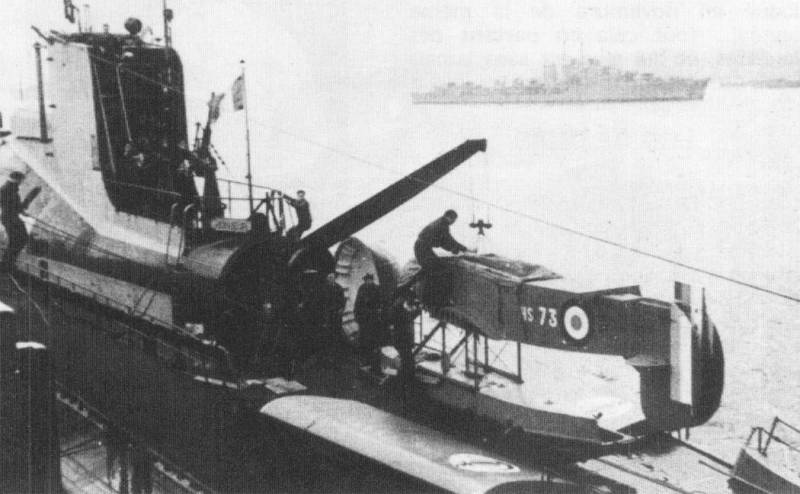
Под палубой предусматривался отсек для катера. Кормовая часть надстройки представляла собой герметичный ангар для гидросамолета Besson MB.411. Его предлагалось использовать для поиска целей и корректировки огня.
Жалобы и предложения
Испытания подлодки Surcouf продолжались с 1929 по 1934 г., и за это время выявили ряд проблем разного рода. Исправить удалось далеко не все. Так, до самого конца эксплуатации имелась проблема со снабжением запчастями и деталями. «Сюркуф» имел минимальную унификацию с другими подлодками, и потому необходимые изделия, вплоть до элементов крепежа, нередко приходилось делать «по индивидуальному заказу».
Выяснилось, что подлодка недостаточно остойчива. В надводном положении тяжелая надстройка с пушками и ангаром приводили к раскачиванию. В подводном положении приходилось прилагать усилия, чтобы удержать корабль на ровном киле. Погружение занимало несколько минут, что давало противнику шанс на удачный ответный залп.
Несовершенные средства управления огнем не позволяли реализовать весь потенциал 203-мм пушек – дальность стрельбы была далека от максимальной, углы обстрела серьезно ограничивались, а применение орудий ночью оказывалось невозможным. Наводка орудия на перископной глубине приводила к разгерметизации соединений и угрожала лодке. Точная стрельба при волнении затруднялась. При этом бортовая качка с креном более 8° исключала возможность поворота башни.
Лодка на службе
Первые годы службы «Сюркуфа», несмотря на все проблемы, прошли достаточно спокойно. Экипаж осваивал технику и учился бороться с ее недостатками. Подлодка регулярно участвовала в учениях, в т.ч. с торпедной и артиллерийской стрельбой. Постоянно совершались выходы в море и дальние походы.
Крейсерская подлодка с уникальным вооружением достаточно быстро стала символом военно-морской мощи Франции. Ее с удовольствием демонстрировали в прессе, а также организовывали дружеские визиты в зарубежные порты.
В середине 1939 г. Surcouf совершила переход через Атлантику, на Ямайку. В сентябре поступил приказ готовиться к возвращению домой в составе эскортных сил одного из конвоев. Через несколько недель лодка прибыла на базу в Шербуре, где оставалась до весны. В мае, почти одновременно с нападением Германии, корабль отправили в Брест для ремонта в условиях сухого дока.
Работы еще не были закончены, но германская армия приближалась, что могло привести к потере корабля. Экипаж решился на настоящую авантюру: с одним работающим дизелем и нерабочим рулем лодка пересекла Ла-Манш и пришла в Плимут.
3 июля французская подлодка стала одной из целей британской операции «Катапульта». Попытка вооруженного захвата «Сюркуфа» завершилась успехом, но в перестрелке погибли трое англичан и один французский моряк. Подводникам предложили присоединиться к «Свободной Франции», однако такое желание выразили лишь 14 человек. Остальных отправили в лагерь для интернированных лиц. Перед уходом с корабля они успели уничтожить документацию и повредить часть систем.
К концу 1940 г. Surcouf перебросили в канадский Галифакс, откуда лодка должна была выходить на сопровождение атлантических конвоев. Подобная служба продолжалась до июля 1941-го, когда корабль отправили в американский Портсмут для проведения ремонта. Технические трудности привели к затягиванию работ, и новый поход удалось начать только в конце ноября. На этот раз подлодку включили в корабельную группу, которой предстояло взять под контроль острова Сен-Пьер и Микелон.
Последний поход
Новый 1942 г. экипаж встретил в Галифаксе. В это время командование «Свободной Франции» и КВМФ обсуждали его дальнейшую службу. Было принято решение перевести «Сюркуф» на Тихий океан для усиления корабельной группировки союзников.
2 февраля подлодка вышла из Галифакса и направилась к Бермудским островам. 12 февраля вышли на следующую часть маршрута, проложенную через Панамский канал. Далее следовало прибыть на о. Таити и оттуда взять курс на австралийский Сидней. Последний должен был стать новой базой для подводников.
В ночь на 19 февраля подлодка со всем экипажем пропала без вести. В тот же день транспорт SS Thompson Lykes сообщил о столкновении с неопознанным объектом. Версия о столкновении подлодки с судном стала основной. Однако высказывались и другие. Подводный крейсер мог погибнуть в результате ошибочной атаки американских противолодочных сил, на борту мог произойти бунт и т.д.
Итоги службы
Крейсерская подводная лодка Surcouf (N N 3) была в строю с 1934 по 1942 г. и за это время не показала никаких особых результатов – но успела проявить себя не с самой лучшей стороны. Корабль регулярно привлекали к учениям, а с 1940 г. ему приходилось выходить в море в рамках реальных операций.
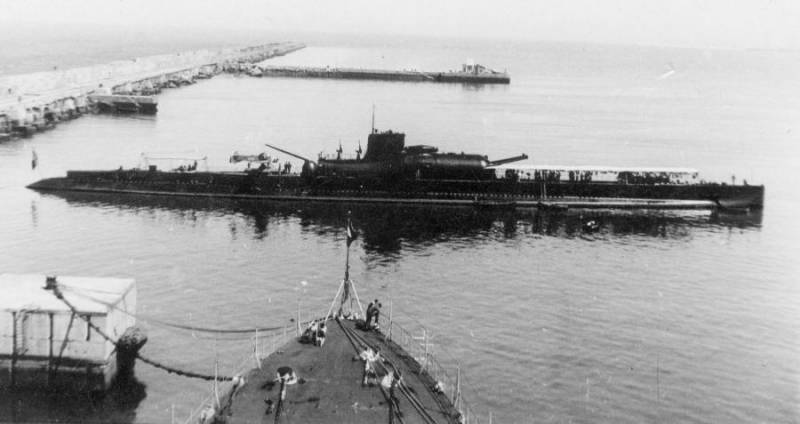
При строительстве подводного крейсера основное внимание уделялось наращиванию огневой мощи артиллерийских систем. Эту задачу удалось решить далеко не в полной мере. Подлодка получила две 203-мм пушки, но их использование по задуманным методам оказалось невозможным из-за ограничений по характеристикам и рисков затопления.
За все время службы на боевом счету крупнейшей французской подлодки были только различные мишени. Ни одной победы в реальном бою – с применением торпед или пушек – добиться не удалось. В первую очередь, это связано с тем, что «Сюркуф» ни разу не использовался по прямому назначению – для нарушения морских коммуникаций противника. Впрочем, участие в эскорте конвоев, даже без поражения вражеских кораблей и подлодок, само по себе приносило серьезную пользу.
Unique and useless. Cruising submarine Surcouf (NN 3)
Under the terms of contracts
The Surcouf was launched in November 1929 and was soon taken out for testing. However, at this stage, the project encountered difficulties of a military-diplomatic nature. In January 1930, a conference was opened in London, which resulted in a new restrictive agreement. The London Naval Treaty introduced the maximum displacement of submarines and the permissible calibers of guns.
Paris was able to defend the already finished «Surkuf», but the construction of the next two submarines was canceled. The Navy command had to revise its plans and strategies.
Testing the submarine and correcting the identified deficiencies took a lot of time. Most of the problems were successfully eliminated, but individual shortcomings turned out to be fundamentally unavoidable. In this form, the fleet accepted the submarine in April 1934.
design Features
The boat was operated by a crew of 118 people, incl. 8 officers. The crew members were responsible for managing all systems, there were gunners, aviation group, etc. If necessary, an inspection group was formed from the sailors. The autonomy of reserves reached 90 days, which made it possible to make long trips and work in the ocean zone. A room for 40 passengers or prisoners was provided.
Of particular interest is the complex of weapons. Four 550 mm torpedo tubes were placed in the nose. In the stern, below deck, two movable blocks were provided, each of which included one 550 mm and a pair of 400 mm vehicles. Thus, on board there were 10 torpedo tubes of two calibers. The total ammunition load is 22 torpedoes.
Instead of the traditional small-sized cabin, Surkuf received a large hermetic superstructure with partial armor. The nose assembly of the superstructure was a turret with two 203mm / 50 Modèle 1924 guns. Horizontal guidance was provided in a small sector. Inside there were stores for 14 rounds and stacks for 60 rounds.
An optical rangefinder with a base of 5 m was placed behind the tower on the superstructure. Due to its position, the viewing, measurement and firing range was limited to 11 km. When using a periscope, the range of fire increased to 16 km. However, on ships with better controls, the Mle 1924 cannon hit 31 km.
According to the project, the bulk of the preparation for firing could be carried out at periscope depth. After surfacing, only fine aiming and some other procedures were required. It took only a few minutes to fire the first shot after surfacing. After firing at the minimum time, the boat could go under water.
Anti-aircraft weapons were installed on the superstructure. Its composition was refined, and as a result, the submarine received a pair of 37-mm Mle 1925 anti-aircraft guns and four Hotchkiss M1929 heavy machine guns.
A compartment for the boat was provided under the deck. The aft part of the superstructure was a sealed hangar for the Besson MB.411 seaplane. It was proposed to use it for finding targets and adjusting fire.
Жалобы и предложения
Tests of the Surcouf submarine lasted from 1929 to 1934, and during this time a number of problems of various kinds were revealed. Not everything was fixed. So, until the very end of operation, there was a problem with the supply of spare parts and parts. «Surkuf» had minimal unification with other submarines, and therefore the necessary products, up to the elements of fasteners, often had to be made «on an individual order.»
It turned out that the submarine is not stable enough. On the surface, the heavy superstructure with cannons and a hangar led to swaying. In the submerged position, efforts had to be made to keep the ship on an even keel. The submersion took several minutes, which gave the enemy a chance for a successful return volley.
Boat in service
The first years of service of «Surkuf», despite all the problems, passed quite calmly. The crew mastered the technique and learned to deal with its shortcomings. The submarine regularly participated in exercises, incl. with torpedo and artillery fire. Outings to the sea and long voyages were constantly made.
The cruising submarine with unique weapons quickly became a symbol of France’s naval power. She was gladly shown in the press, and also organized friendly visits to foreign ports.
In mid-1939, Surcouf crossed the Atlantic to Jamaica. In September, an order was received to prepare to return home as part of the escort force of one of the convoys. A few weeks later, the boat arrived at the base in Cherbourg, where it remained until spring. In May, almost simultaneously with the German attack, the ship was sent to Brest for repairs in dry dock conditions.
The work was not yet completed, but the German army was approaching, which could lead to the loss of the ship. The crew decided on a real gamble: with one working diesel engine and an inoperative rudder, the boat crossed the English Channel and came to Plymouth.
On July 3, the French submarine became one of the targets of the British Operation Catapult. An attempt at the armed capture of the Surkuf ended in success, but three Englishmen and one French sailor were killed in the shootout. The divers were offered to join the Free France, but only 14 people expressed such a desire. The rest were sent to an internment camp. Before leaving the ship, they managed to destroy the documentation and damage some of the systems.
In August, repairs were completed and a new crew was formed. Due to the lack of specialists, many seamen from civilian ships entered it without any experience of service in underwater navy. Political disagreements related to the organization of the Free French Navy, combat service, etc., became a serious problem. The situation on board gradually heated up, the number of violations increased, and the morale fell. Seeing all this, the command of the British KMVF began to doubt the need to keep the «Surkuf» in the ranks.
By the end of 1940, Surcouf was transferred to Halifax, Canada, from where the boat was supposed to go out to escort Atlantic convoys. A similar service continued until July 1941, when the ship was sent to American Portsmouth for repairs. Technical difficulties led to a delay in the work, and a new campaign was started only at the end of November. This time the submarine was included in the naval group, which was to take control of the islands of Saint-Pierre and Miquelon.
The Last Campaign
The new 1942 crew met in Halifax. At this time, the Free French command and the KVMF were discussing his further service. It was decided to transfer «Surkuf» to the Pacific Ocean to strengthen the Allied naval grouping.
On February 2, the submarine left Halifax and headed for Bermuda. On February 12, we started the next part of the route, laid through the Panama Canal. Then it was necessary to arrive at about. Tahiti and from there head for Australian Sydney. The latter was to become a new base for submariners.
On the night of February 19, the submarine with its entire crew went missing. On the same day, SS Thompson Lykes reported a collision with an unidentified object. The version of the collision of a submarine with a ship became the main one. However, others also spoke up. The submarine could die as a result of a mistaken attack by American anti-submarine forces, a riot could occur on board, etc.
Service results
During the construction of the submarine cruiser, the main focus was on increasing the firepower of artillery systems. This task has not been fully solved. The submarine received two 203-mm cannons, but their use according to the intended methods turned out to be impossible due to limitations in performance and the risks of flooding.
Thus, the unique, but controversial submarine, which had a specific ratio of characteristics, only helped to a limited extent in the fight against the enemy. Perhaps the situation could have changed, but on the night of February 19, 1942, in her stories the point was put. The most interesting and promising combat unit in France was killed in unclear circumstances.
Surcouf Cruiser Submarine
Spotlight Airplane
Spotlighting lets you share this airplane with all of your followers. This is a great way to help new players get the recognition they deserve for their work.
Click the Spotlight button below and all of your followers will receive a notification.
Download Airplane
If you are on Mac, copy this airplane ID to the clipboard and press CMD+L while in the designer in SimplePlanes to download this airplane.
If you are on mobile, then try requesting the mobile version of the site. You can learn more about how to do that here. Otherwise, just click the Download for Mobile button below.
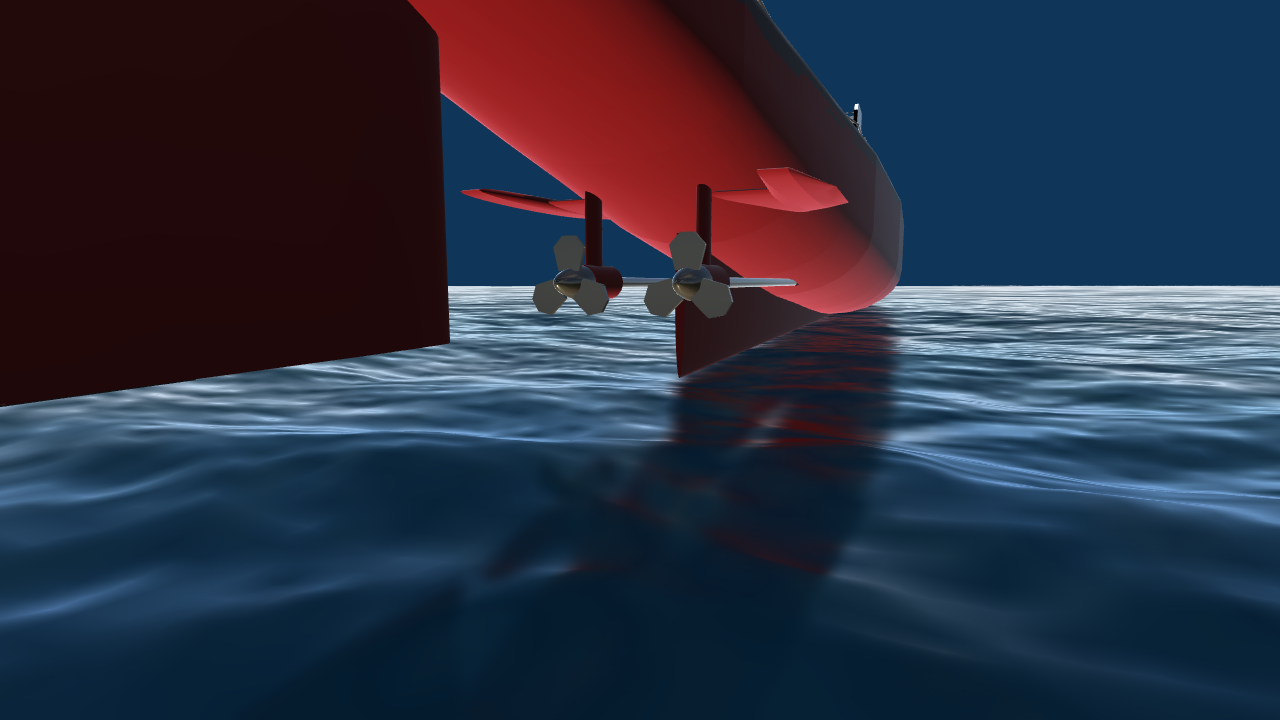
FS Surcouf (NN-3)


Users:
French Navy
Free French Naval forces
Built: 1927
In Commission: 1934–1942
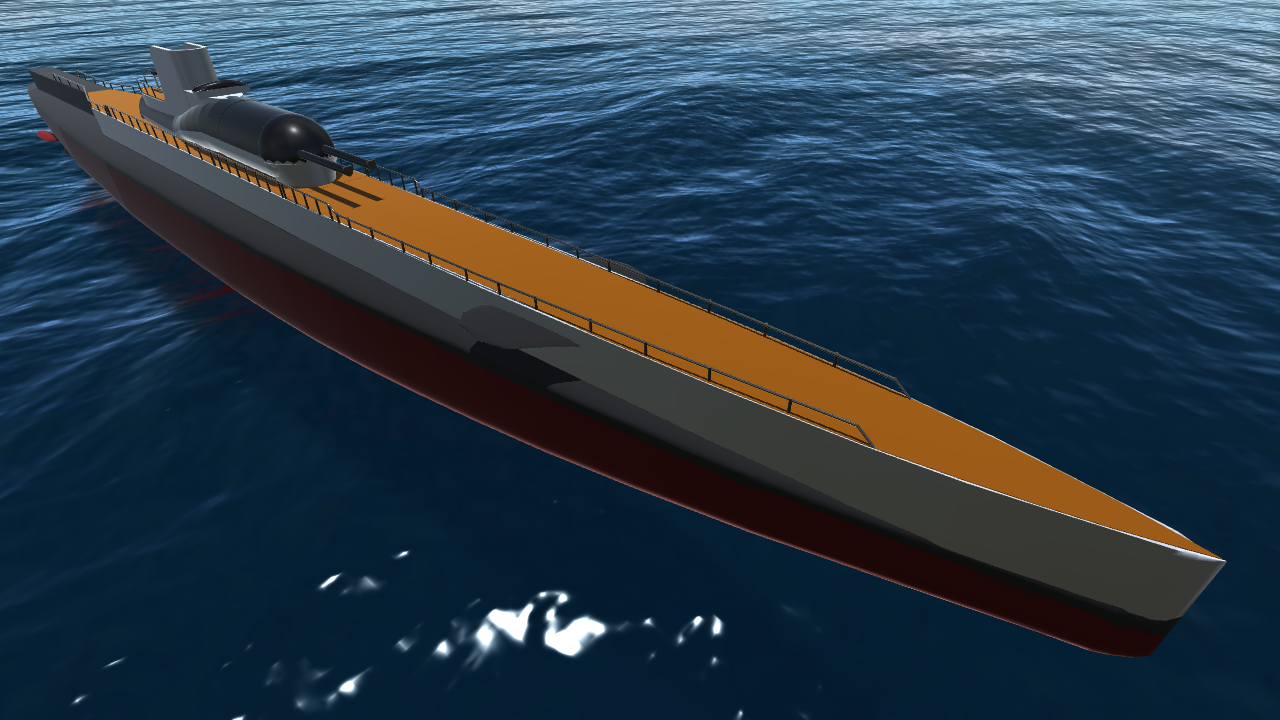
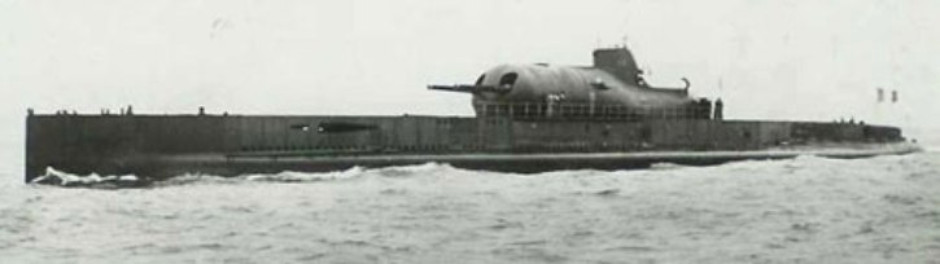
Until the final years of WW2, when the japanese I-400 class submersible aircraft carriers were built, the French Submarine Surcouf was the largest submarine ever constructed. Unique in its very heavy armament of two 203mm naval guns, the Surcouf would be the most heavily armed submarine of its day.
The origins of the Surcouf lie within the concept of the ‘Cruiser Submarine’ a larger submarine built primarily to use large guns on the surface with the classic armament of torpedoes being a secondary. Germany’s unrestricted submarine warfare in World War I would inspire the French navy to build their own heavily armed long range submarine. A large submarine capable of roaming far out onto the ocean and picking off enemy merchant ships.
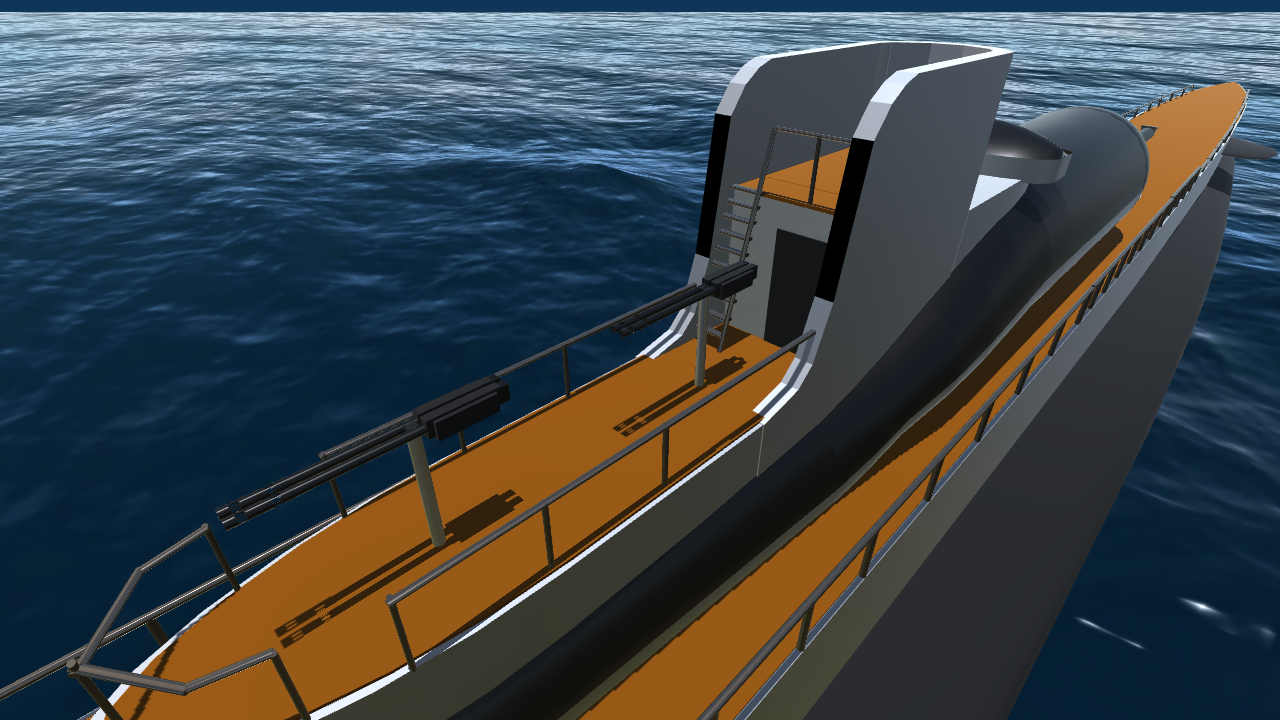
The decision to use guns as a primary weapon was influenced by the desire for a more economic weapon, something that could carry many more rounds than the normal armament of torpedoes. A fully enclosed turret would house the guns, with water tight doors at the ends of the barrels to prevent flooding.
The Surcouf was the first submarine designed with an internal space to carry and deploy an aircraft. A Besson MB-411 floatplane would be stored in a hangar and deployed for use of reconnaisance and spotting to assist the targeting of the guns. Later plans introduced the idea of deploying a Dorand G20 Gyroplane for, ironically, anti submarine usage. The invasion of France would stall further development on the G20 and Surcouf, with the former only getting a working prototype in 1947.
The Surcouf would manage to escape to England as France was conquered by the germans, however the British would sieze it to prevent it from falling into enemy hands as the French surrendered. Once captured, it would be refitted and then redeployed under the Free French Navy in August 1942.
The Surcouf would ultimately never manage to see action, as on the way toward the Panama canal it would suffer a devastating accident which sunk the submarine and killed all its crew. The cause was never confirmed, though is believed to be a collision with an American Freighter ship.
Features:
Instructions:
Submarine Operation
1) Pitch for pitch control, used to control depth.
2) Roll for Rudder, steers the boat
3)VTOL for ballast control, allows for floating/sinking
4)VTOL up all the way+AG8 for surface running, this will free up VTOL for use with guns.
Gun Operation
1)AG1 for 203mm guns
2)AG2 for 13mm AA
3)VTOL and Trim to aim guns.
Note: Due to water spawns dropping you in the water you may start sinking at first. Give it a moment and use the throttle and ballast and it will stop. The sub has neutral buyancy meaning that it will not sink or float unless another force acts upon it (i.e. falling from above the water, engine power, and ballast control)
At CptJacobson’s request, here is the Surcouf! This thing came along surprisingly smoothly, minus some brief issues with the ballast system the model came together quickly as did the submarine and even turret functions. I also decided to put in some fine detail in this one, though in this case skipped on adding a plane instead of skipping the deck railing. I’d say probably my best looking boat yet, smooth hull and a nice amount of detail.
As long as you’re out of range of the missiles, this thing can tank all the flak in the world and sink the entire Sky Park navy with its guns! The missiles won’t insta kill you, but they won’t take too long to start breaking stuff.